We explored practical measures to enhance productivity, including access to improved seedlings, modern irrigation systems, and climate-resilient farming practices. Special attention was given to ginger production, considering its increasing global demand, and the need to strengthen value addition through processing, packaging, and export development.
Cassava and rice production were also highlighted as critical for improving food security and feeding agro-processing industries in the region. Investments in storage, warehousing, and efficient distribution systems were identified as essential steps to reduce post-harvest losses and maximize farmer incomes.
Furthermore, the provision of modern agricultural equipment such as tractors, harvesters, and irrigation tools was emphasized as a key driver for transforming agriculture from subsistence to commercial-scale production. Mechanization is expected to boost productivity, improve efficiency, and attract youth participation in the agricultural sector.
Recognizing that sustainable development depends heavily on human capital, we also discussed the importance of education and scholarship opportunities for the people of the Oti and Volta Regions. In particular, there was strong emphasis on facilitating scholarships in critical fields including: Science,Technical and vocational training, Engineering, Information Technology and Computer Science, Agriculture and agribusiness
Such educational investments will not only empower the youth with practical and technical skills but also create a new generation of innovators capable of driving development within their communities. Strengthening academic and technical capacity will play a vital role in bridging the skills gap and supporting long term regional transformation.
Beyond primary production, we explored broader agricultural opportunities such as agribusiness development, agro-processing investments, and market expansion initiatives. The promotion of farmer cooperatives and access to financing were identified as critical steps in enabling farmers to scale their operations and improve their bargaining power.
Additionally, knowledge exchange programs between Ghana and Türkiye could provide farmers and stakeholders with exposure to modern agricultural technologies, best practices, and innovative farming systems.
Another key area of discussion was the need to attract strategic investors into the Oti Region. The region presents immense opportunities across agriculture, agro processing, and industrial development.This will encourage foreign and local investor’s to create employment opportunities, boost local production and value addition, enhance infrastructure development, Increase revenue generation.
Partnerships with Turkish investors, in particular, could support the establishment of processing plants, manufacturing hubs, and agribusiness ventures that will significantly transform the regional economy.Infrastructure development, especially road networks was highlighted as a critical factor in unlocking the full potential of the region. Poor road connectivity continues to limit access to markets, increase transportation costs, and contribute to post harvest losses.
Improving roads will,Facilitate efficient movement of goods and services, Support trade within and beyond the region, Attract investors and industrial activity, Enhance access to essential services such as education and healthcare. Strategic investments in road infrastructure will therefore play a central role in driving holistic development across the Oti Region.
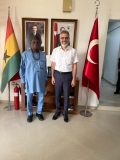
The meeting marked a significant step toward strengthening bilateral cooperation between Ghana and Türkiye, particularly in advancing development in the Oti Region. By focusing on agriculture, education, investment, and infrastructure, there is a clear and promising pathway toward sustainable growth and economic transformation.
The discussions reaffirmed a shared commitment to harnessing the region’s vast potential and translating it into meaningful opportunities that will improve livelihoods, empower communities, and contribute to national development.